
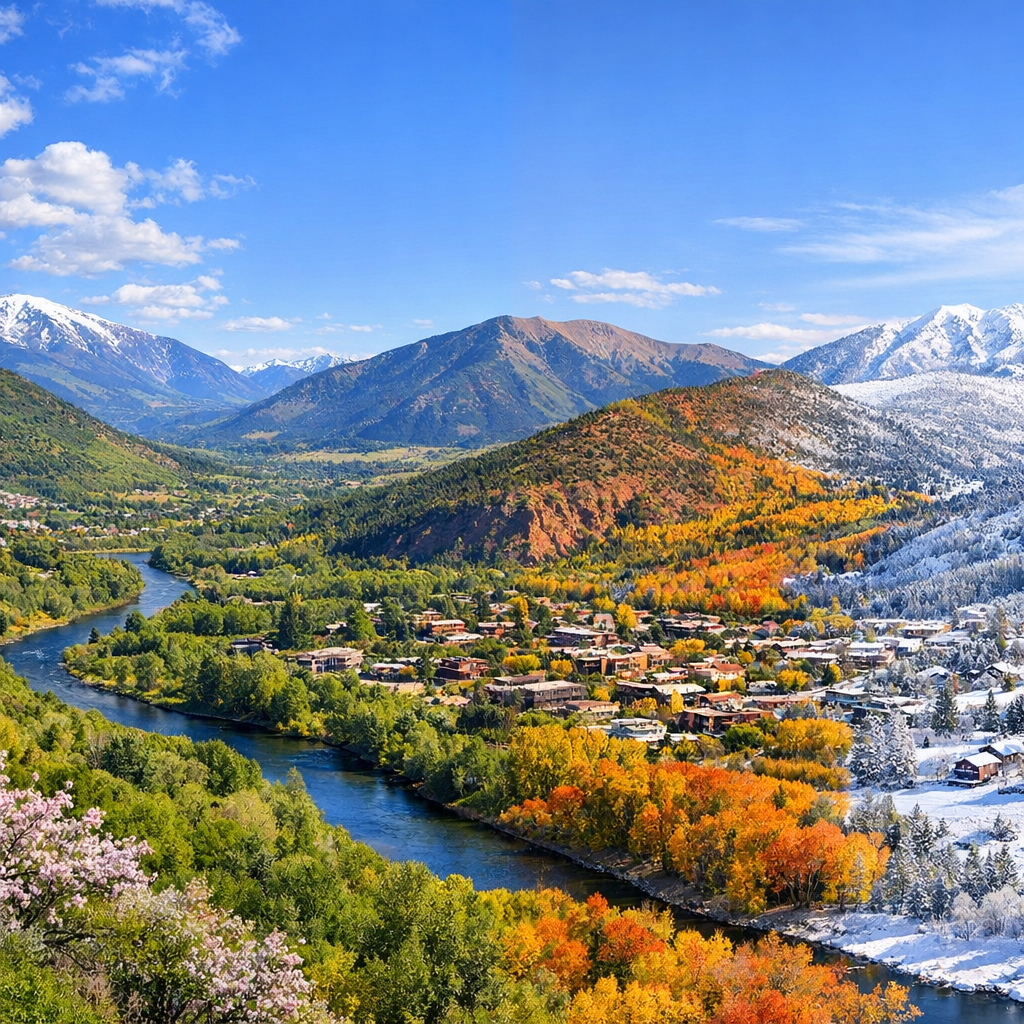
Basalt, Colorado, nestled in the Roaring Fork Valley, experiences a diverse climate characterized by distinct seasonal variations. Understanding these patterns is essential for residents and visitors alike.
Seasonal Temperature Variations
Throughout the year, Basalt’s temperatures fluctuate significantly:
- Winter (December – February): Average high temperatures range from 33°F to 36°F, with lows between 4°F and 6°F.
- Spring (March – May): Highs increase from 42°F in March to 62°F in May, while lows rise from 15°F to 30°F.
- Summer (June – August): Warm days with highs between 74°F and 80°F, and lows from 35°F to 41°F.
- Fall (September – November): Cooling trends with highs decreasing from 70°F in September to 43°F in November, and lows from 33°F to 16°F.
Precipitation and Humidity
Basalt receives an average annual precipitation of approximately 16.77 inches. Monthly rainfall varies, with April being the wettest month, averaging 2.05 inches, and September the driest, with 0.63 inches. Relative humidity fluctuates throughout the year, peaking at 88% in February and dipping to 48% in June.
Environmental Considerations
Basalt’s location in a high-risk wildland-urban interface zone necessitates proactive wildfire mitigation efforts. The Basalt Mountain area, for instance, has experienced multiple fire starts since 2000, underscoring the importance of coordinated action among local agencies to reduce wildfire risk.
Additionally, the region’s water sources, including Basalt Springs and local wells, are treated with chlorine to ensure safety. Residents should be aware of potential issues such as hard water minerals and chlorine byproducts that may affect water quality.
By staying informed about Basalt’s climate and environmental factors, the community can better prepare for seasonal changes and address environmental challenges effectively.