

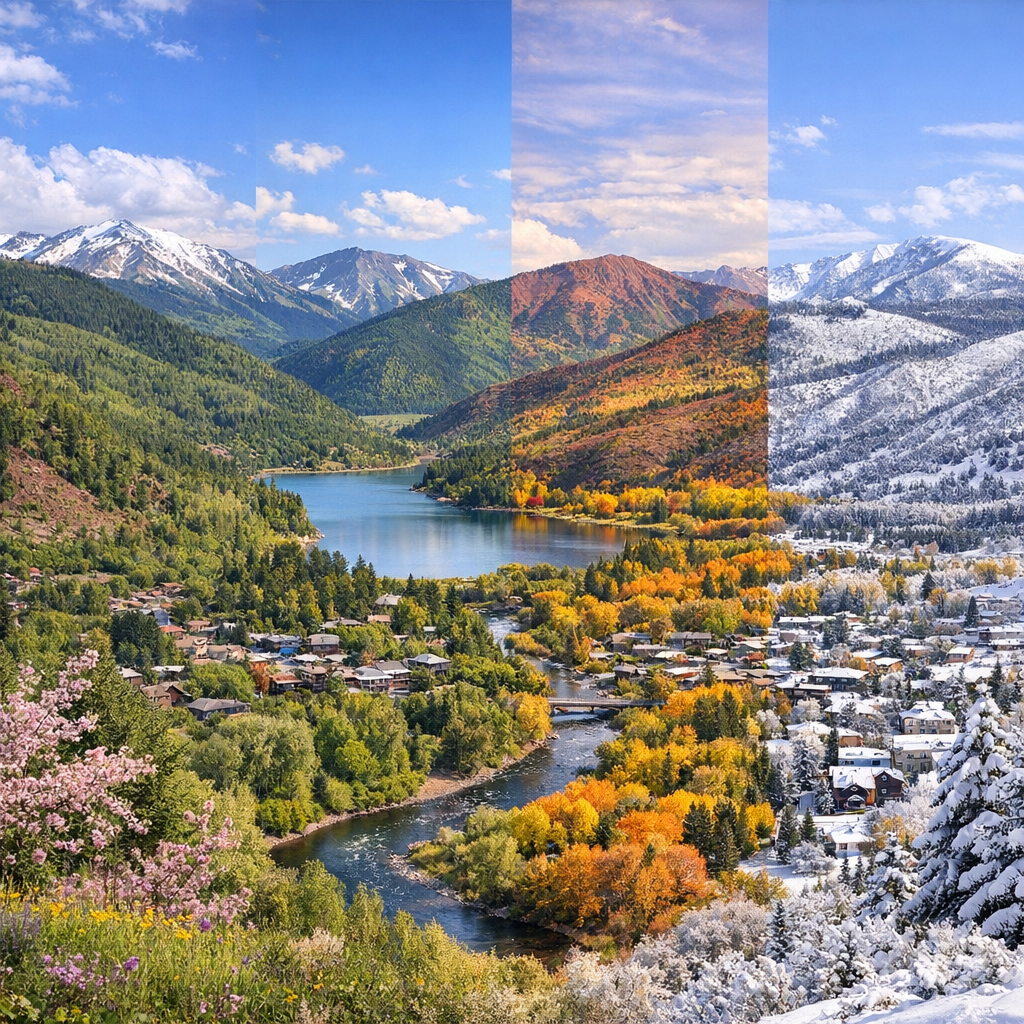
Basalt, Colorado, nestled in the Roaring Fork Valley, experiences a diverse climate influenced by its elevation and geographical location. Understanding these patterns is essential for residents and visitors alike.
Temperature Variations
Throughout the year, Basalt’s temperatures fluctuate significantly. Winters are cold, with average highs around 36°F (2°C) in January and lows dipping to 13°F (-11°C). Summers are warm, with July seeing average highs of 87°F (31°C) and lows around 53°F (12°C). This range offers a variety of seasonal activities, from skiing in winter to hiking in summer.
Precipitation and Humidity
Annual precipitation averages approximately 16.77 inches (425.94 mm), with May and September being the wettest months, each receiving about 2 inches (51 mm) of rainfall. Humidity levels vary, with February being the most humid month at 88%, and June the least at 48%. These conditions contribute to the region’s lush landscapes and diverse ecosystems.
Environmental Considerations
Basalt’s climate also presents environmental challenges. The area is prone to wildfires, as evidenced by the 2018 Lake Christine Fire. Factors such as prolonged drought, tree dieback due to Ips beetle infestations, and the wildland-urban interface increase the risk. Collaborative efforts among local organizations aim to mitigate these hazards and protect the community.
Understanding Basalt’s climate is crucial for preparedness and appreciation of the region’s natural beauty. Staying informed about weather patterns and environmental factors ensures a safe and enjoyable experience for all.